Home/Courses + trips/Mountaineering Trip
Chamonix Alpine Skills & Summits
Five days in the heart of the Mont Blanc massif learning to move confidently on glaciers, rock and mixed ridges, then putting it all together on real alpine summits.
- Location
- Chamonix, France
- Duration
- 5 Days
- Difficulty
- Introductory
- Guest Ratio
- 2 to 1
Per person price on request
Book nowLearn to Mountaineer in Chamonix, Then Climb Real Alpine Summits
Chamonix Alpine Skills & Summits is a 5-day guided introduction to alpine mountaineering in the Mont Blanc massif, run by IFMGA-certified Altus guides at a 2:1 guest-to-guide ratio. It runs July 13 to 17 and July 25 to 29, 2027 (or on custom dates), with two nights at the Albert 1er hut, and no previous mountaineering experience is needed.
The trip is built for fit hikers, climbers and backcountry skiers who want the real thing with plenty of coaching. You’ll spend two nights at the Albert 1er hut learning glacier travel and crevasse rescue before a summit attempt, then switch to valley granite for a multi-pitch rock day, and finish high on the Aiguille du Midi on a classic snow and rock ridge. With just two guests per guide, you get hands-on instruction all week and leave with skills you can keep using.
Highlights
- Two nights at the Albert 1er hut above the Glacier du Tour
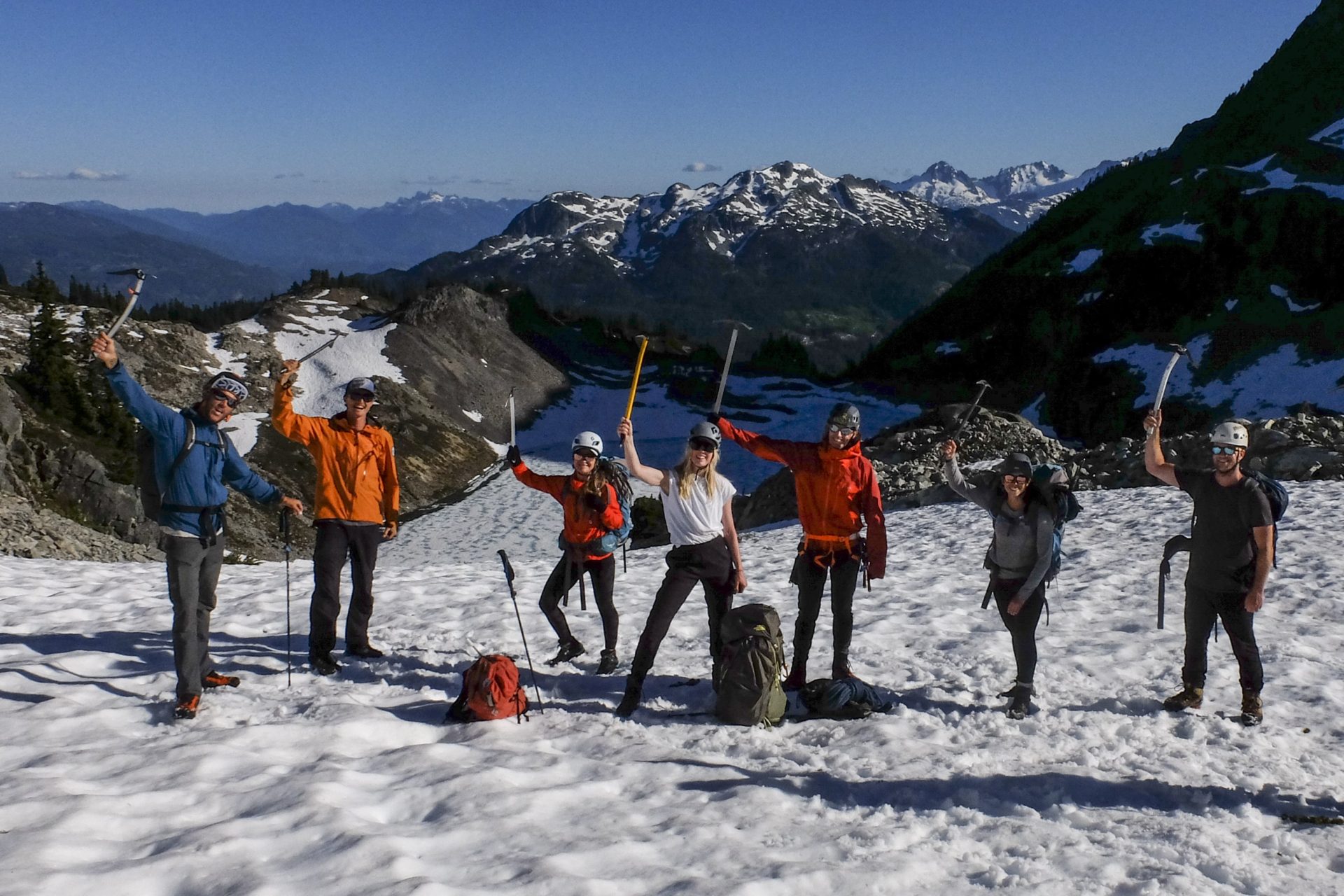
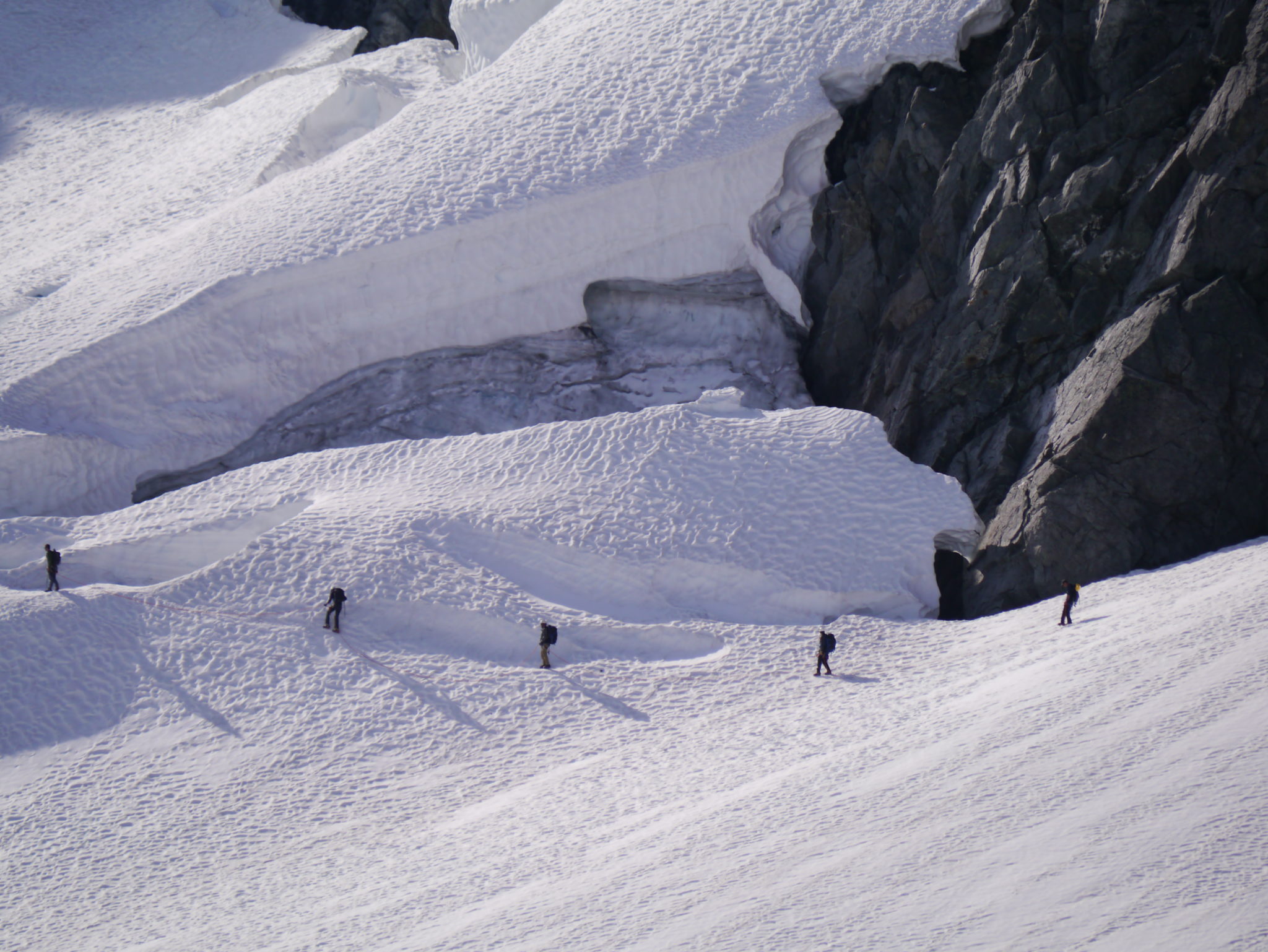
- Glacier travel, crampon and ice axe technique, and crevasse rescue
- Summit attempt on the Aiguille du Tour (3,540 m) or Aiguille du Chardonnet (3,824 m)
- Multi-pitch rock climbing in the Aiguilles Rouges facing Mont Blanc
- A mixed ridge high on the Aiguille du Midi (3,842 m) to finish the week
Many guests go straight on to our Mont Blanc Training & Ascent the following week. The skills and acclimatization from this trip are ideal preparation.
Itinerary
- Day 1: Le Tour to the Albert 1er hut
- Meet at 8:00 at the Altus Mountain Clubhouse for a gear check, then drive 20 minutes to Le Tour. Lifts take us to about 2,200 m and a scenic 2-hour hike leads to the Albert 1er hut (2,702 m). Afternoon session on the edge of the Glacier du Tour: crampon technique, ice axe use and roping up.
- Hike +500 m. Night: Albert 1er hut
- Day 2: Glacier skills day
- A full day on the Glacier du Tour covering moving as a rope team, route finding around crevasses, self-arrest, anchors in snow and ice, and crevasse rescue with pulley systems. Conditions permitting, we tie it together on a short ascent of a nearby summit such as the Tête Blanche (3,429 m).
- Night: Albert 1er hut
- Day 3: Summit day
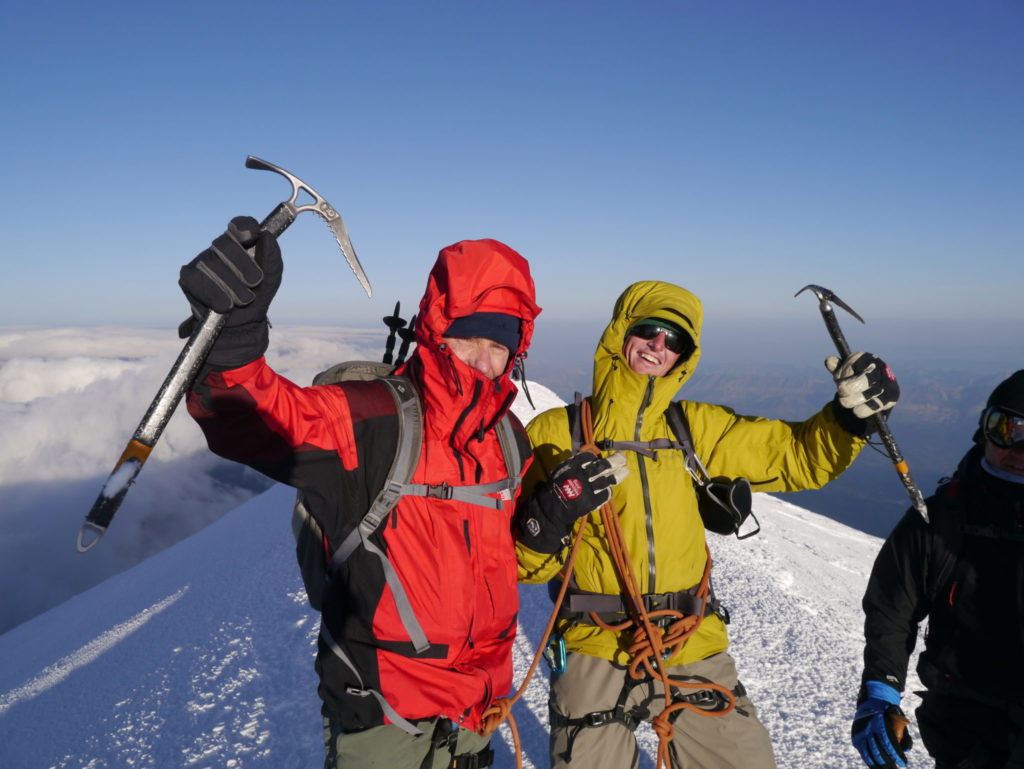
- An alpine start by headlamp. Our usual objective is the Aiguille du Tour (3,540 m), a classic glacier climb finishing on a granite summit block with views into Switzerland. Strong teams in good conditions may instead attempt the Aiguille du Chardonnet (3,824 m) via the Forbes Arête, a longer and more committing ridge. We descend to the hut and ride the lifts back to Chamonix.
- Approx. +850 to 1,100 m. Night: Chamonix
- Day 4: Multi-pitch rock in the Aiguilles Rouges
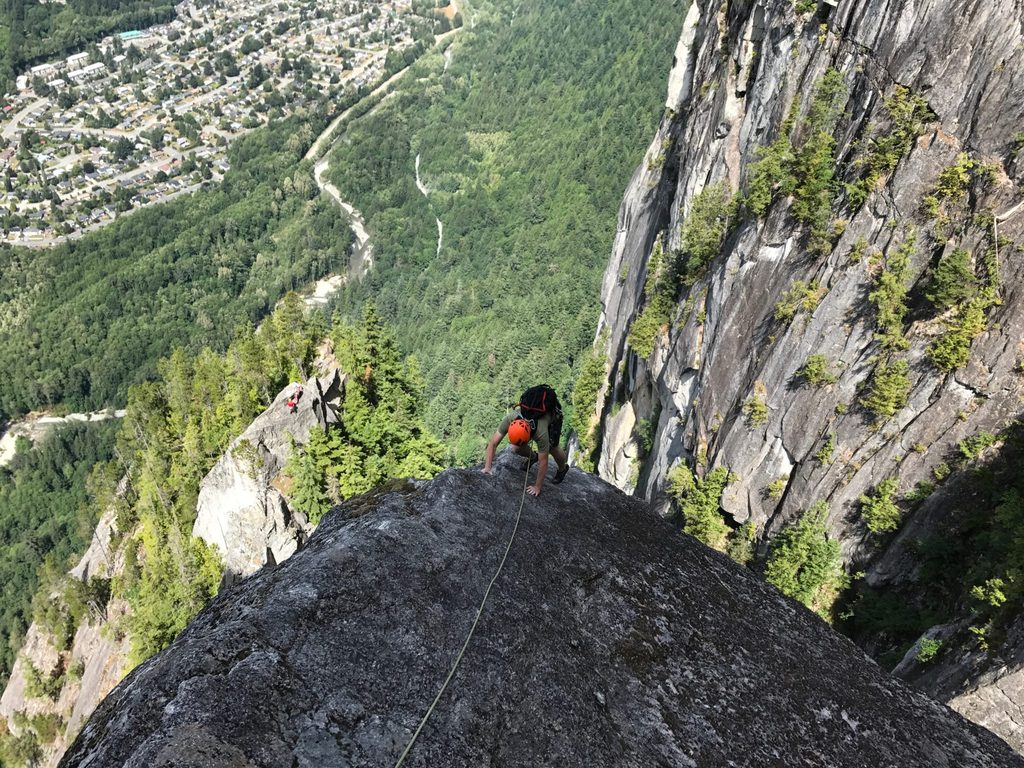
- A change of pace on the sunny side of the valley. We take the lift into the Aiguilles Rouges and climb a multi-pitch route, such as the Index southeast ridge, with Mont Blanc across the valley. Learn efficient belays, rope management, climbing in a party of three and rappelling.
- Night: Chamonix
- Day 5: Aiguille du Midi ridge
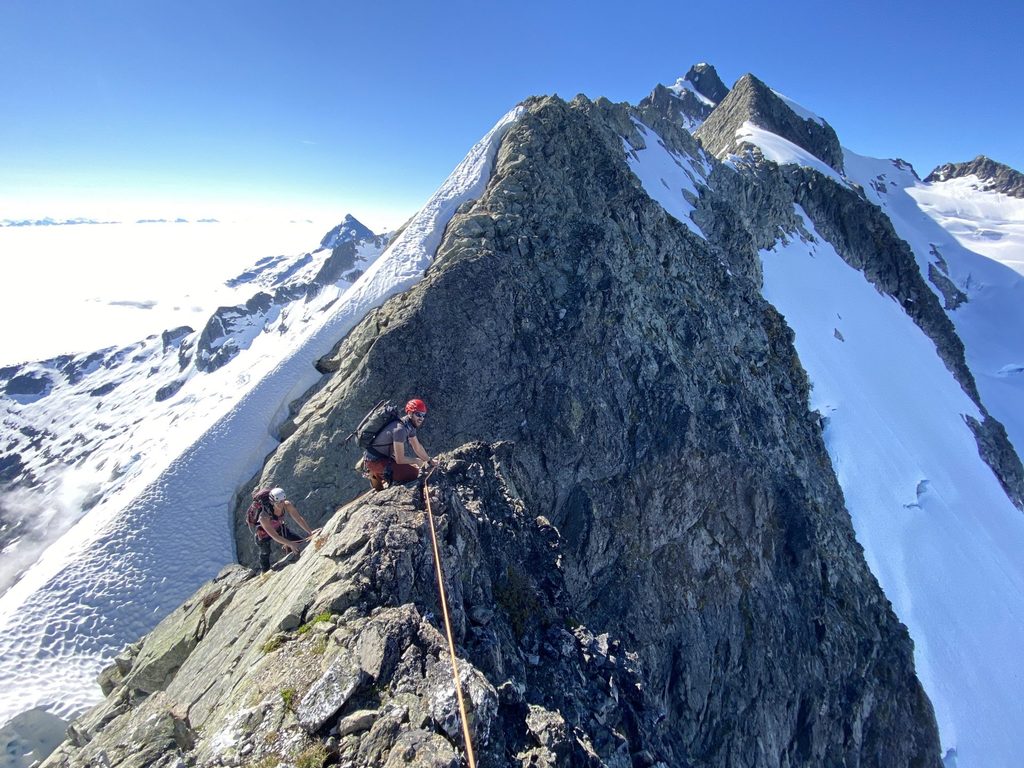
- The Aiguille du Midi cable car lifts us to 3,842 m. We descend the famous snow arête onto the glacier and climb the Pointe Lachenal traverse, a fun mix of snow ridges and granite. Teams wanting more rock can choose the Pyramide du Tacul’s east ridge, and experienced rock climbers the Rébuffat route on the Midi’s south face. Back down by cable car for a debrief.
- Trip ends mid-afternoon in Chamonix
The itinerary is a plan, not a promise. Your guide adapts the order and objectives to weather, snow and rock conditions, and group fitness.
Is this for you?
Experience and fitness
- No previous mountaineering experience needed
- Fit hiker, comfortable gaining 800 to 1,000 m in a day carrying a 10 kg pack
- Able to do 6 to 9 hour days back to back
- Some rock climbing experience (indoor is fine) helps on Days 4 and 5
How to prepare
Build up to longer hikes with elevation gain over the spring, ideally with a few days carrying a loaded pack. Stair and hill training, plus a little time on rock or in a climbing gym, will make the week more enjoyable.
2027 DATES
Includes
- IFMGA-certified Altus guide at 2:1
- 2 nights’ hut accommodation with dinner and breakfast
- Lift tickets on itinerary days
- Technical gear loan (harness, helmet, ice axe, crampons)
- Guide expenses
Does Not Include
- Flights and airport transfers
- Valley accommodation and meals
- Lunches, snacks and drinks at the huts
- Rescue and medical insurance (required)
- Personal gear and boot rental
- Guide gratuity
Frequently Asked Questions
Is this suitable for complete beginners?
Yes, if you’re fit. We teach everything from how to put crampons on. With two guests per guide, the pace and instruction adapt to you.
How high do we go?
The Albert 1er hut sits at 2,702 m and the highest point is 3,842 m on Day 5. Most people feel the altitude a little at first; we build up gradually and the itinerary is designed to help you acclimatize.
What happens after this trip?
Many guests go straight on to our Mont Blanc Training & Ascent (July 4 to 10, July 11 to 17 or July 18 to 24, 2027). The skills and acclimatization from this week are ideal preparation.
How do I get to Chamonix?
Fly into Geneva (GVA). Chamonix is about 1 hour 15 minutes away by shared or private airport shuttle, which you can book online in advance. We’ll send recommended shuttle companies once you’re booked.
Where do I stay in the valley?
Valley nights aren’t included, so you can choose your own comfort level. We recommend the Altus Mountain Clubhouse, which is also our meeting point.
What are the mountain huts like?
Huts are staffed mountain lodges with shared dorm rooms, blankets and pillows. Dinner and breakfast are served (half board). You’ll need a sleeping bag liner and earplugs. Most high huts have no showers, and drinking water is bought at the hut, so carry cash.
Do I need travel insurance?
Yes. Mountain rescue and medical insurance that covers mountaineering at altitude is a condition of joining any Altus Alps trip. We also strongly recommend trip cancellation insurance. Please send us your policy details before the trip.
What if the weather is bad?
Your guide makes the call each evening and may change the order of days, swap to a different objective or adjust timing to make the most of the conditions. Safety comes first and summits are never guaranteed. Hut and lift costs paid to third parties can’t be refunded.
How do payments and cancellations work?
A 30% deposit secures your spot, and the balance is due 30 days before the trip. If you cancel more than 30 days out, everything you’ve paid is refunded, less the 2.5% card processing fee. Within 30 days of the trip, payments are non-refundable. Prices are in Canadian dollars plus 5% GST.
Should I tip my guide?
Tipping is never expected but always appreciated. 10 to 20% is customary, and your guide keeps all of it.
Can I rent gear?
Yes. Harness, helmet, ice axe and crampons are loaned free by Altus. Chamonix has several shops that rent mountaineering boots and clothing. Book boots in advance in June and July and try them on the day before your trip.
Do Mtn Club members get a discount?
Yes. Mtn Club members save 5% on Alps trips. Ask us about joining.
What gear do I need?
Provided free by Altus: harness, helmet, ice axe, crampons, crevasse rescue kit, ropes and group safety gear, first aid kit, radios and emergency communication.
Footwear
- Mountaineering boots that take crampons (B2 minimum; B3 for summits over 4,000 m)
- Light approach shoes or trainers for the valley
Clothing
- Base layers (top and bottom)
- Light insulating layer (fleece or light synthetic)
- Warm puffy jacket with hood
- Waterproof shell jacket and pants
- Softshell or alpine climbing pants
- Light gloves and warm insulated gloves
- Warm hat, sun hat or cap, buff
Pack and essentials
- 30 to 40 L alpine pack
- Glacier sunglasses (category 3 or 4) and ski goggles
- Headlamp with spare batteries
- Sunscreen SPF 50 and lip balm
- 1.5 to 2 L water capacity
- Snacks for long days
- Trekking poles (recommended)
- Rock climbing shoes
- Chalk bag (optional)
For the huts
- Sleeping bag liner (required in French and Swiss huts)
- Earplugs, small toiletries, personal medications
- Cash in euros (and Swiss francs for Switzerland)
- Passport, insurance details, alpine club card if you have one
Pack light: on hut days you carry everything on your back. We’re happy to review your gear by video call before you fly.